• Home
  • About
  • My books
  • Nonorganic potatoes on list of 7 foods experts won’t eat
  • Africa

sallykneidel.com

GREEN LIVING, GREEN TRAVELING

Feed on
Posts
Comments
kneidel-header.jpg
« In Puerto Rico: Jayuya and the Toro Negro State Forest
We’re importing oil from poor countries with far more spills »

Oil Spill 2010: Wildlife Danger Considered Terrifying

May 3rd, 2010 by Sally Kneidel

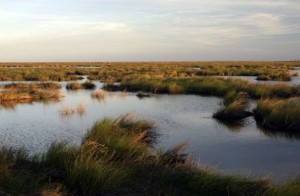
Louisiana marsh, photo by USGS

This post is now on Google News. Also on Basilandspice.com which is partnered with Newstex, TOPIX, EIN McClatchy-Tribune News Service and other media outlets.

On Thursday April 29, the slick from the oil gushing into the Gulf of Mexico covered about 1,150 miles. By the end of the next day, the size of the oil slick had more than tripled to 3,850 miles. Said Hans Graber of the University of Miami, this rapid rate of expansion suggests that the oil is now spurting from the ocean floor much more quickly than it was.

The broken oil well that’s spewing more than 200,000 gallons per day is a mile underwater, making efforts to shut it off extremely difficult. Crews are using at least 6 remotely operated vehicles to try to stem the flow, but so far have been unsuccessful. It may be weeks or even months before the gush is stopped.

Long term consequences to coastal ecosystems and fish

What are the long term repercussions of such an unprecedented volume of oil hitting our Gulf Coast, and perhaps the coasts of Florida, Georgia, North and South Carolina as well?  The Gulf spill is at the top of “the Loop Current,” a part of the Gulf Stream that sends water around Florida and as far north as Cape Hatteras, NC.

Many people are focused on the impact to the fishing industry, which will indeed be hit hard. “Louisiana, after Alaska, is  the second-largest seafood producing state,” said Dr. Ralph Portier of Louisana State University. The wetlands of the Mississippi Delta are essential to much of that sea life. Many oceanic fish lay their eggs in protected estuaries and marshes, where the hatchlings are safer from predators and food may be more accessible. Crabs, shrimp, and oysters are also completely dependent on coastal wetlands. “Every crevice, creek, bayou, bay, where water flows in and out of coastal grasses – that’s the habitat for all these coastal nurseries. If we lose it or it’s impacted, we have a real long-term effect,” said Dr. Portier of LSU.

Marsh grasses are naturally resilient, but the coastal ecosystem of Louisiana has already experienced a number of serious insults. According to the U.S. Geological Survey, the hurricanes of 2005 turned about 217 square miles of marsh into water. If nature had been left alone, that marshland would be replenished by sediment flowing down the Mississippi River. But levees holding back the Mississippi River prevent the natural deposition of sediment. The marshes are chopped up by navigation channels and pipeline canals, too, which allow saltwater into freshwater marshes, slowly killing the marshes.

“Hanging by  a fingernail”

“The trouble with our marshes is they’re already stressed, they’re already hanging by a fingernail,” said Dr. Denise Reed of the University of New Orleans.

And yet it now seems possible that the influx of oil from the still-gushing well in the Gulf could deliver the killing blow to the whole coastal ecosystem. The volume of oil that now seems likely to wash up on the Louisiana coast could overwhelm the coastal grasses’ ability to recover. If the roots die, the plants die and the ground underneath turns to mud and disappears into the sea within a year, said Dr. Irving Mendelssohn of Louisiana State University.

Even if the volume of oil does not increase dramatically, it is still likely to move through channels into the saltwater marshes. Then, even a minor tropical storm could send it farther inland to the freshwater marshes, which are more fragile and almost impossible to clean, said Mendelssohn.

Especially valued fish likely to be heavily impacted include the Atlantic tarpon and the overfished Atlantic bluefin tuna.

What about other wildlife?

The Gulf has four species of sea turtles and all of them are endangered.  Turtles and marine mammals don’t try to avoid oil slicks, said Jackie Savitz of the conservation group Oceana. Consequently they wind up eating the oil; it also blocks their airways.

Not only coastal birds, but migratory songbirds will feel the effects

Of course, thousands of shore birds and marsh birds breed in the coastal marshes of the Gulf Coast. That includes species such as white ibises, anhingas, purple gallinules, common gallinules, pied-billed grebes, wood ducks, king rails, clapper rails, black-necked stilts, killdeer, Louisana herons, black-crowned and yellow-crowned night herons, green herons, little blue herons, snowy egrets, great egrets, black skimmers, American coots, mottled ducks,  and so on. But it’s not just the shore birds and marsh birds that will be impacted by a heavy or steady influx of oil on the coast. Millions of North American songbirds migrate in spring from their wintering grounds in southern Mexico and the Yucatan Peninsula to the Gulf shores, before flying on to their breeding grounds in the eastern U.S. and Canada.  This phenomenon is called by birders the “Gulf Express.” It includes tiny ruby-throated hummingbirds, many species of warblers, kingbirds, thrushes, orioles, cuckoos, and more – at least 55 species in all. The flight covers 500 or 600 miles of open water for birds that may weigh no more than two 25-cent coins.  Even in good years, many of them don’t make it. It all depends on good weather, physical conditioning, and luck. Thousands of birdwatchers converge on the Gulf coast and its barrier islands to witness the migratory spectacle each spring.

“If anything goes sour, the birds die”

In a very good year, the birds may arrive at the coast with enough energy to fly past the marshes, landing in forests 30 miles inland. But if the weather is unsettled, or the winds are from the north, the birds pile up along the coast. They’re hungry, thirsty, and tired. As author and birder Scott Weidensaul said about this migration, “If anything goes sour, the birds die.”

As of right now, many of the birds have already made the spring crossing, but not all. For those who haven’t yet, this may be a spring when something “goes sour”. And what about next fall, when they do the flight in reverse? And next spring – what if the marshes are all coated in oil, or the coastal grasses are all dead? Many of these bird species are already in serious trouble from habitat loss in Latin America and in the U.S.

Prospects are “terrifying”

None of us know right now the true long-term impacts of the rapidly expanding mass of toxic goo that’s floating in the Gulf of Mexico. I’m not sure anyone has even calculated yet the potential damage to coastal estuaries and marshes of the Southeastern states. But as NY Times writers Leslie Kaufman and Campbell Robertson said, the prospects for coastal land, livelihoods, and wildlife are “terrifying everyone.”

Sources:

Leslie Kaufman and Campbell Robertson. “Spill puts wetlands in peril.” NY Times. Reprinted in Charlotte Observer. May 2, 2010.

Kirsten Valle. “Some fear oil from Gulf spill could reach N.C.” Charlotte Observer. May 1, 2010.

Renee Schoof and Karen Nelson. “Oil spill is endangering a vast array of wildlife.” Charlotte Observer. April 30, 2010.

Cain Burdeau and Holbrook Mohr. “Document: BP didn’t plan for a major spill.” Charlotte Observer. May 1, 2010.

Scott Weidensaul. Living on the Wind: Across the Hemisphere with Migratory Birds. North Point Press. New York. 1999.

Some of my previous posts on coastal environmental issues:

10% of Louisiana underwater by 2100, says recent study

North Carolina’s vital coastal breeding grounds vulnerable to rising seas

Copenhagen data confirm: 10% of Florida underwater by end of the century

10,000 pythons breeding in Florida, says new USGS report

Tags: Coastal environment, Ecosystems, Fisheries, Oil spill, Wildlife, Wildlife habitat

Posted in Birds, Ecosystems, Endangered species, Environmental pollution, Human behavior, Wildlife, Wildlife survival

2 Responses to “Oil Spill 2010: Wildlife Danger Considered Terrifying”

  1. on 10 May 2010 at 11:13 AM1sallykneidel.com » Blog Archive » We’re importing oil from countries with far more spills

    [...] Comments « Oil Spill 2010: Wildlife Danger Considered Terrifying [...]

  2. on 29 May 2010 at 9:55 PM2sallykneidel.com » Blog Archive » Gulf Oil Spill 2010: Drilling for Dollars, Not Oil

    [...] The consequences are severe for everyone We are destined to suffer dramatically from dragging our feet in weaning ourselves from dependence on oil. I’m reminded of the story where the farmer, when setting out to town by riding his donkey, begins by belting the donkey on the head with a two-by-four. When asked by a bystander why he hit the donkey so brutally before even starting his journey, he replied “Well, first I have to get his attention!” This Gulf oil spill is a similar wake-up call. It’s urgent that we come to our senses and address larger issues that lie ahead over the next 100 years. Just consider the economic and social implications of running out of oil as our primary energy supply. Without jet fuel, what would happen if air transport came to a halt in just a few decades? Can anyone envision an airplane fueled by solar power, a fuel-cell, a windmill, or natural gas? What about our diesel-powered rail and trucking systems? How can we collect and distribute the food we grow on huge corporate farms, or the cotton we grow, or the polyester we manufacture for clothing? How will we get people to work without gasoline? How will we build the windmills or the solar power cells without the plastics produced from oil? How will we support the 2.5 billion people worldwide who live in cities? Over 3.4 billion people live within 120 miles of coastlines. If sea levels rise just a meter, there will be refugees from cities well beyond New Orleans. Add Miami, New York, Tokyo, Mumbai, Shanghai, and Jakarta for a start. Why “crying wolf” is the right thing to do I’m afraid that by now many readers are steaming, some writing this off as insane left-wing liberal tree-hugging alarmism. But the BP oil spill is a wake-up call that we all must take seriously. In his book Collapse, Jared Diamond addresses the wisdom of being conservative when setting criteria for raising environmental alarm. Let me borrow from him and illustrate with the smoke alarm in my kitchen. I note, often with irritation, that it sometimes goes off with the slightest hint of fire – a piece of over-cooked toast will get it wailing, sometimes just turning on a cook-top burner that has an oily smudge on it will trigger the alarm. The piercing whistle is annoying when it goes off, but after I settle down and realize that all is well, my rational self notes that I want my smoke alarm to work that way. If the alarm goes off when my house is already on fire, it would do me no good, my loved ones and valuable possessions could be gone. Similarly, we need to put our environmental warning systems on a low setting. We can turn our backs on the BP oil spill and write it off as a mistake in technology. But I implore you to look at the big picture. Ignoring warnings like this carries us ever closer to the point where our wake-up call will come too late. We’ve been hit between the eyes with a two-by-four. Time to stop the arguing and denial, and take serious steps toward preparing for the inevitable day when the oil is gone. We need to take what oil’s left and direct it towards supporting a massive investment in the manufacture and research of sustainable energy sources. The enormity of what’s at stake demands our immediate attention. Previous posts on this site, by Sally Kneidel PhD,  about the 2010 BP oil spill in the Gulf: We’re importing oil from poor countries with far more spills Gulf Spill 2010:  Danger to wildlife considered “terrifying” [...]

  • Sally blogs about….

    Sally Kneidel
    ....sustainable living and dining, ecotravel, indigenous cultures around the world, protecting wildlife habitat, and more...
  • Top Health Blogger

    HealthBlogger Network
    Sally Kneidel
    Green Living Community
    Wellsphere
  • 1st Place Winner

    Sally Kneidel, PhD: 1st Place Winner of People's Choice Health Blogger Award. Green Living Category
    People's HealthBlogger Awards
    People's HealthBlogger Awards - Best of Category Winner!wellsphere
  • Amazon Page

    Amazon has created an author page for my writing (click here) to feature almost all my books, my bio, some pix.
  • See a sampling of my posts on Basil & Spice

    You can find an assortment of my travel, health, and eco-posts on Basil & Spice, a syndicated website of current topics by selected book authors.basil and spice
  • Creative Commons License

    Creative Commons License
    Any use of images or text from this website must be attributed to Sally Kneidel, PhD. Photos and text by Sally Kneidel, PhD is licensed under a Creative Commons Attribution-Noncommercial-No Derivative Works 3.0 United States License.
    Based on text and photos at sallykneidel.com.
    Permissions beyond the scope of this license may be available at sally.kneidel@gmail.com.
  • Site Meter
  • Archives

  • Recent Posts

    • Proof that no-fishing zones work / Meeting Kumi Naidoo
    • My review of “Burning in the Sun” – I loved this unique eco-documentary
    • Orangutans left-handed; chimps and gorillas are righties
    • South Carolina dog knows more than 1000 words, says NY Times
    • New study: Women’s tears contain pheromones that turn men off
    • New study: Hope for polar bears
  • Categories

    • Agriculture (9)
      • Crop diversity (1)
      • Radiation in food (1)
      • Safety (1)
      • Tree plantations (1)
    • Animal behavior / animal intelligence (2)
    • Animal welfare / animal rights (13)
    • Book review (1)
    • Climate change (13)
      • Rising sea levels (2)
    • Eco-travel (32)
      • Africa (14)
      • Asia (4)
      • Caribbean (4)
      • Puerto Rico (4)
      • South Africa (6)
      • Southeast Asia (14)
        • Bali (2)
          • Marine mammals (1)
        • Borneo (6)
        • Indonesia (8)
        • Jakarta (3)
        • Japan (3)
          • earthquake (2)
          • stricken reactors (2)
          • Tsumani (2)
        • Java (1)
        • Malaysia (4)
        • Sumatra (7)
        • Thailand (1)
      • Swaziland (1)
    • Film review (4)
    • Food (26)
      • Dairy (3)
      • Farming (4)
      • Fast food (1)
      • Fish (2)
      • Gardening (2)
      • High fat foods (2)
      • Organic (3)
    • Greenpeace (1)
      • Kumi Naidoo (1)
    • Health (38)
      • Alternative medicine (3)
      • Babies (1)
      • Cancer (4)
      • Depression (2)
      • Fish (1)
      • Flu (4)
      • Health effects of eating meat (3)
      • Human behavior (9)
      • Pharmaceuticals (3)
      • Smoking (1)
      • Stress (2)
    • Livestock (10)
      • Contamination in milk (1)
      • Desertification (1)
    • My books (16)
      • Classroom Critters and The Scientific Method (2)
      • Going Green (co-authored with Sadie Kneidel) (11)
      • Going Green: A Wise Consumer's Guide to a Shrinking Planet (1)
      • Veggie Revolution (co-authored with Sadie Kneidel) (9)
    • Resources (6)
      • Overconsumption (6)
    • Sustainable Living (42)
      • Energy-efficient housing (6)
      • Environmental footprint (17)
      • Environmental pollution (6)
      • Food (7)
      • Nuclear energy (2)
      • Oil spill (3)
      • Sustainable choices for your home (13)
    • Wildlife (72)
      • Birds (5)
      • Bushmeat (1)
      • Coqui frogs (2)
      • Ecosystems (16)
        • Rain forest (5)
      • Endangered species (13)
      • Fish sanctuaries (1)
      • Frogs (1)
      • Invasive species (1)
      • Lizards (2)
      • N0-fishing zones (1)
      • Primates (5)
      • Snails (1)
      • Tigers (1)
      • Wildlife behavior (10)
      • Wildlife habitat (26)
        • Deforestation (10)
      • Wildlife survival (22)
    • Africa links

      • Haroun Kola – Eco Geek, Rainbow Guru
      • Honeyguide Tented Safari Camps in South Africa
      • Welverdiend Village Tours
    • Artists' sites

      • Charleston through an Artist's eye: the blog!
      • Kathleen Jardine
      • Richard Stenhouse Art
    • Authors' and writers' sites

      • Basil and Spice
      • Goodbye, me
    • Blogroll and Favorite Websites

      • ProFauna Indonesia
    • Eating sustainably

      • Vegetarian Women
      • Veggie Revolution
    • Environmental sites

      • Haroun Kola – Eco Geek, Rainbow Guru
      • Huffington Post: Green News and Opinion
      • Lighter Footstep
      • More Minimal: Making More of Less
      • ProFauna Indonesia
      • SunGarden Houses
      • Treehugger
      • Veggie Revolution

sallykneidel.com © 2009-2013 All Rights Reserved.

Free WordPress Themes | Fresh WordPress Themes